
Is Individuation a Eurocentric Path to Wholeness? Part I

What Does It Mean to Become Yourself?
All over this website, we talk about the goal of therapy as becoming our most authentic selves. We explore the parts of ourselves we have hidden. We consider the expectations we have internalized. And we investigate the ways we may be living according to someone else's definition of who we should be. In Jungian psychology, this process is known as individuation.
Carl Jung understood individuation as a lifelong process of becoming more psychologically whole. It involves integrating disowned aspects of ourselves. It includes developing a relationship with the unconscious. And it incorporates discovering a sense of identity that extends beyond the roles we play in society.
At Rezak Therapy we value this framework. It invites us to look inward, question inherited expectations, and develop a deeper relationship with ourselves. But there is an important question worth asking: Whose idea of the authentic self are we using?
Many foundational psychoanalytic theories developed within European intellectual and cultural traditions emphasized individual identity, autonomy, and differentiation. What happens when these theories are treated as universal models of psychological development? We can overlook the ways culture, family, spirituality, and collective identity shape our experience of being human.
For people from non-white cultural backgrounds, becoming more fully ourselves may involve something more complex. It may involve reclaiming ancestral knowledge, navigating multiple cultural identities, or finding ways to belong without abandoning ourselves.
Perhaps becoming whole does not always mean becoming more separate.
The Western Ideal of the Independent Self

Many Western psychological frameworks place considerable emphasis on autonomy, independence, and developing a distinct individual identity. These values are not inherently problematic. Recognizing our needs, establishing boundaries, making choices, and developing an internal sense of direction can all be important aspects of psychological well-being.
However, when independence becomes the primary measure of emotional maturity, something is lost. Other ways of understanding the self can be misunderstood.
In some cultural contexts, maturity may be expressed through maintaining close family relationships, honoring elders, participating in communal life, or making decisions with the wider family in mind. A person's identity may be deeply intertwined with ancestry, religious traditions, and community.
These orientations are not necessarily signs of dependency or an inability to differentiate. They may reflect a different understanding of what it means to be a person.
If your therapist assumes that healthy development always involves moving away from family expectations or prioritizing individual desires, they may inadvertently frame a your cultural values as psychological obstacles.
A person who wants to remain closely connected to their family may not be avoiding adulthood. Someone who considers their community when making important decisions may not lack a sense of self. The question is not whether independence is good and connection is bad, or vice versa. It is whether therapy makes room for different ways of experiencing both.
When Individuation Becomes Eurocentric
Jung's concept of individuation emerged from a particular historical and intellectual context. Although he explored mythology, religion, and spiritual traditions from different parts of the world, his theories were largely shaped by European assumptions and interpretive frameworks.
This does not mean his work has no value across cultures. Rather, it invites us to consider what happens when a theory developed within one cultural context is applied to people whose experiences are shaped by different histories and understandings of identity.
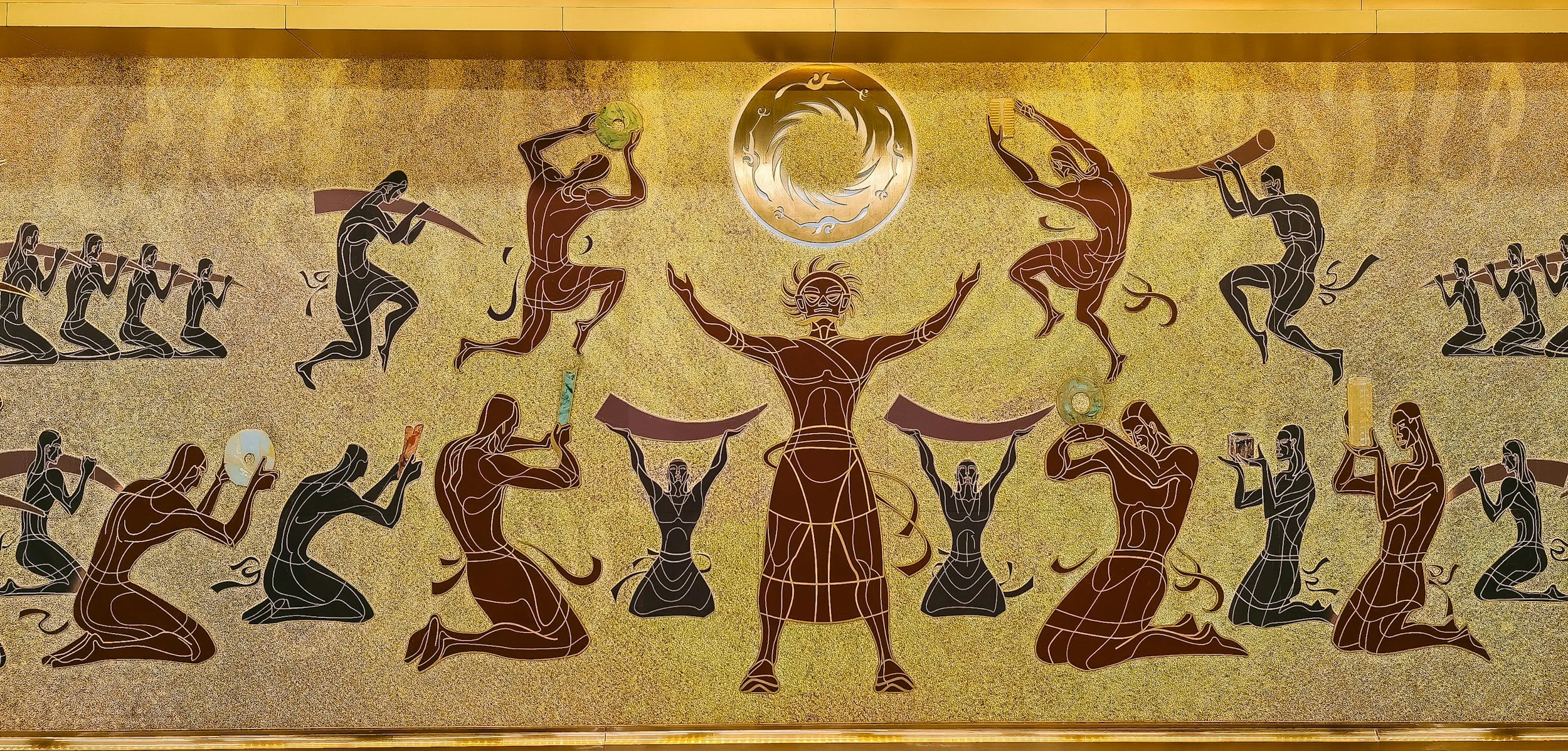
A Eurocentric approach to individuation can emerge when Western ideas about selfhood are treated as the default. When other cultural orientations are viewed as deviations from that norm, problems arise.
Consider the idea of becoming your own person. In some therapeutic settings, this might mean separating personal desires from inherited beliefs and learning to tolerate the discomfort of disappointing others. For some clients, this process can be liberating. For others, the same language may fail to capture the full meaning of their experience.
Someone from an immigrant family might understand their identity through the sacrifices made by previous generations. Their professional aspirations may be connected to a parent's unrealized opportunities. Their sense of responsibility may be inseparable from love, gratitude, and a desire to support relatives.
Another person may experience cultural traditions as a source of spiritual grounding. Consider trying to belong in a society where you are frequently made to feel that you do not belong. If psychological growth is understood primarily as separating from external expectations, these relationships may be interpreted as constraints on personal development.
But what if some of these relationships are essential to a person's sense of wholeness? The problem is not individuation itself. It is the assumption that one cultural interpretation of psychological growth should apply to everyone.
When Culture and History Shape the Self
For people of color, developing an authentic identity may also involve navigating racism, colonial histories, migration, and cultural displacement. What if you learned to adjust your speech, appearance, or emotional expression to feel safe and accepted in predominantly white environments?

These adaptations might appear to be a false self that needs to be shed in the pursuit of authenticity. Yet they likely have developed as ways to navigate discrimination, protect employment opportunities, or move safely through the world.
Similarly, someone caught between family expectations and dominant cultural norms may be navigating competing systems of belonging. It is so much more complex than simply struggling to distinguish their own desires from those of others.
A culturally responsive therapeutic approach does not automatically encourage you to abandon these adaptations or choose one identity over another. It asks what circumstances made these patterns necessary? What have they protected in you? What could greater freedom look like now?
It also recognizes that the effects of racism and historical injustice cannot always be resolved through individual introspection alone. The psyche develops within a social world. Our understanding of ourselves is influenced not only by our inner lives. It emerges based on the messages we receive about whose identities, histories, and ways of living are valued.
Rethinking the Path to Wholeness
We do not need to abandon Jungian psychology to recognize its cultural limitations. We can appreciate its invitation to integrate disowned aspects of ourselves while remaining open to other understandings of psychological growth.
For some people, individuation may involve establishing boundaries and developing greater independence. For others, it may involve reconnecting with family, reclaiming cultural identity, or discovering that their well-being is deeply connected to their community.
Often, it will involve a combination of these experiences. The question is not simply how we become individuals. It is how we become more fully ourselves within the relationships, histories, and cultures that shape us.
In Part Two, we will explore how relational understandings of identity, ancestry, and intergenerational healing can expand our understanding of individuation. We'll also explore what this means for culturally responsive psychotherapy.
At Rezak Therapy, depth psychotherapy offers space to explore the personal and relational experiences that shape our sense of self, while remaining curious about the cultural contexts in which those experiences unfold.