Why You Don't Need to Be an "Artist" to Benefit from The Artist's Way

When people hear about Julia Cameron’s seminal book, The Artist’s Way, they often self-select out before they even read the introduction. “I don’t paint,” they think. “I work in finance.” Or, “I’m a lawyer, a teacher, a healthcare worker, a parent—I’m a pragmatist, not an artist.”
If you view creativity through the lens of a gallery opening or a published novel, this reaction makes perfect sense. Our culture conditions us to treat creativity as a specialized career track rather than a fundamental human trait. From a holistic, therapeutic perspective, defining creativity so narrowly is a form of self-sabotage.
The truth is simple: The Artist’s Way is a framework for learning how to live with vitality.
Creativity is Life Force, Not a Product

In our therapy practice, we often meet individuals who feel completely disconnected. They are highly functional, successful, and doing everything "right" on paper. Yet, they describe a persistent sense of grayness or chronic burnout. Their psyches often hold the unsettling question: “Is this all there is?”
In psychology, we understand this state as a disconnection from what D.W. Winnicott called the True Self. The True Self is the seat of our spontaneity, authentic desires, and unedited feelings. So many of us spend years operating purely out of our analytical minds. We adapt our lives to external demands and professional expectations. When we do this, the True Self goes into hiding. We rely entirely on our protective, logical structures to navigate life. This way of living eventually leads to emotional exhaustion.
When we lack a creative outlet, we default to psychological rigidity. We need a space to play, experiment, and try things without needing to be "good" at them. Without that we lose our capacity to wonder.
Creativity is a synonym for life force. Unblocking your creativity expands your capacity for joy, cognitive flexibility, and emotional resilience. It changes how you show up in your relationships. It changes how you view your career options. It changes how you handle daily stress.
The "Non-Creative" Imposter Syndrome

If you consider yourself a "creative wanna-be," your inner critic has likely built a convincing case for why you don't belong in a creative recovery workshop. The critic is a master trial lawyer. It uses classic psychological defense mechanisms disguised as unassailable logic.
"You don't have a creative bone in your body, so why waste the money?"
"You're too practical for this artsy stuff."
"You're going to embarrass yourself in front of people who actually know what they are doing."
This is imposter syndrome operating as a protective mechanism. Your brain naturally craves comfort and predictability. Stepping into a workshop that asks you to explore your hidden desires feels risky to the ego. The mind manufactures an identity—"the non-creative type"—to keep you safe from potential failure.
Analytical professionals often experience some of the most profound breakthroughs in our workshop. Imagine what happens when a mind accustomed to constant structural pressure finally receives permission to play without a deadline or a performance review. The psychological relief is immense. Reclaiming your creative side doesn't mean you have to change careers. It means bringing your full self to the life you already have.
Why Do It in a Group Container?
You could easily buy the book and try to work through the 12 chapters alone. Many of our workshop participants have tried that before. But creative resistance is incredibly clever. It is the reason thousands of copies of The Artist's Way sit half-read on nightstands around the world. The journaling and writing prompts begin to stir up deeper emotional layers. They challenge your old protective habits and demand your time. The solitary mind will usually find an excellent excuse to stop.
Entering a structured, facilitated group shifts you from isolation to what we call shared witnessing.
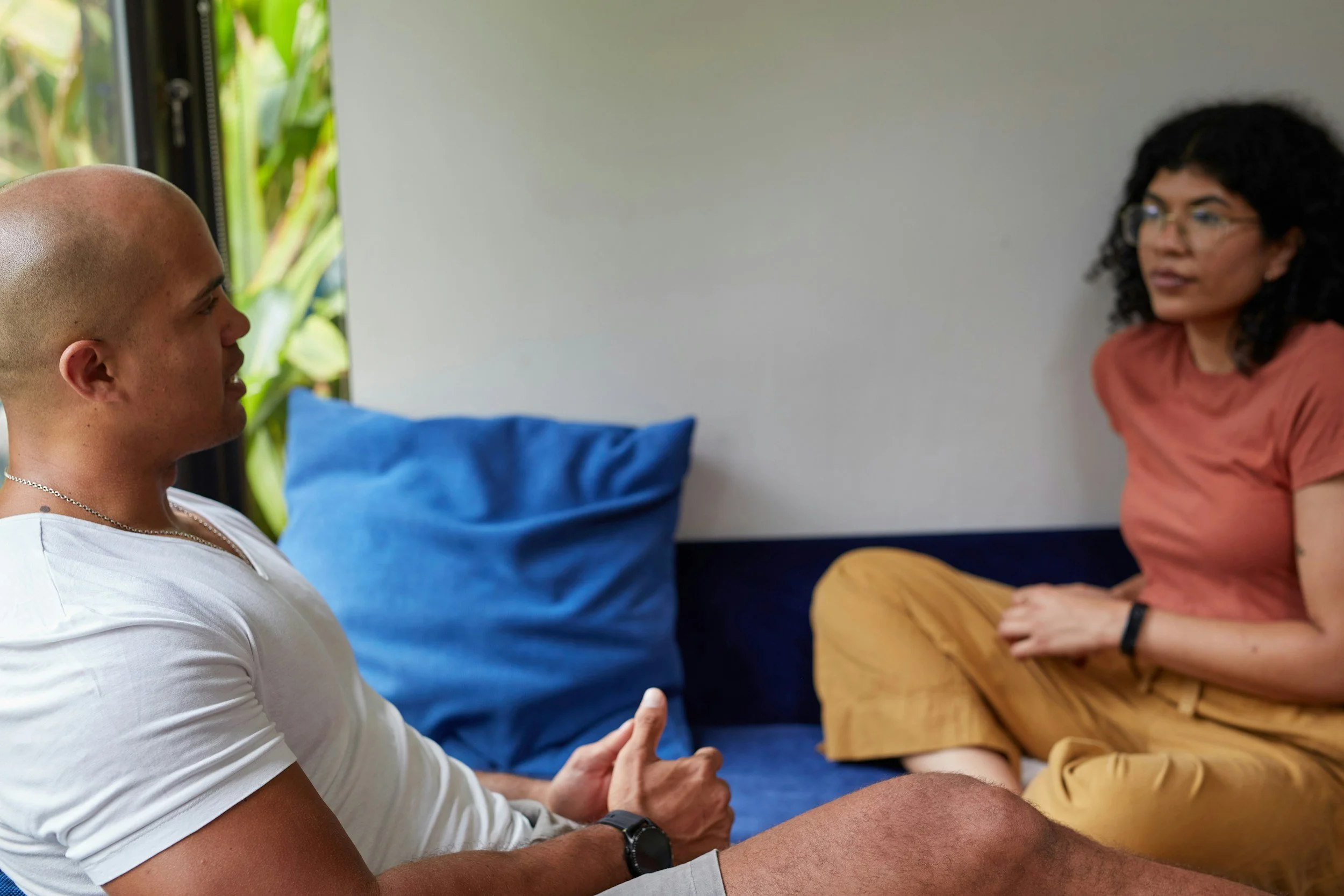
In our creativity workshop, we cultivate an environment of deep safety and nurturing. This is a space free of performance anxiety. Whether you are a seasoned creative looking to unblock a specific project, or someone who hasn't picked up a colored pencil since elementary school, the group container acts as a nervous system regulator.
When you hear a peer vocalize the exact same fears and doubts that keep you awake at night, the volume on your own inner critic drops dramatically. Watching others navigate their vulnerability gives you implicit permission to do the same.
Reclaim Your Color
If you are facing a major life transition, feeling professional burnout, or simply desiring to bring a sense of curiosity back into your daily routine, you belong in this circle. You don't need a portfolio, a secret masterpiece hidden in a drawer, or an artistic background. You just need a willingness to show up and explore.
Join Our Upcoming Cohort
We are enrolling for our next session of The Artist's Way Workshop. Spaces are intentionally limited to maintain an intimate, safe, and collaborative environment.
[Click here to view schedule details and secure your spot.]
Other Services Offered at Rezak Therapy in Pasadena, CA
At Rezak Therapy, we help you align with your most authentic self through integrative, trauma-informed care. Our holistic therapy framework includes specialized modalities like somatic psychotherapy, mindfulness practices, and depth therapy.
Beyond addressing foundational mental health, our services target specific lifecycle challenges and growth points. We provide dedicated support for adults navigating modern pressures, individuals managing major life transitions, and couples seeking to break old communication cycles. We also offer an Interpersonal Process Group—a dynamic, relational space where you can explore how you relate to others in real time, heal interpersonal wounds, and build deeper, more authentic connections.
To learn more about holistic psychotherapy and how we tailor our services to your needs, explore our blog.